
Digital PCR dPCR works by separating a bulk PCR reaction into thousands of nanoliter-scale microreactions each containing zero one or just a few DNA molecules. Quantitative PCR qPCR also called real-time PCR or quantitative real-time PCR is a PCR-based technique that couples amplification of a target DNA sequence with quantification of the concentration of that DNA species in the reaction.

Gene Quantification Absolute Quantification Using Real Time Rt Pcr

Absolute Quantification Of Drnop Expression By Rt Qpcr In Adult Download Scientific Diagram
2
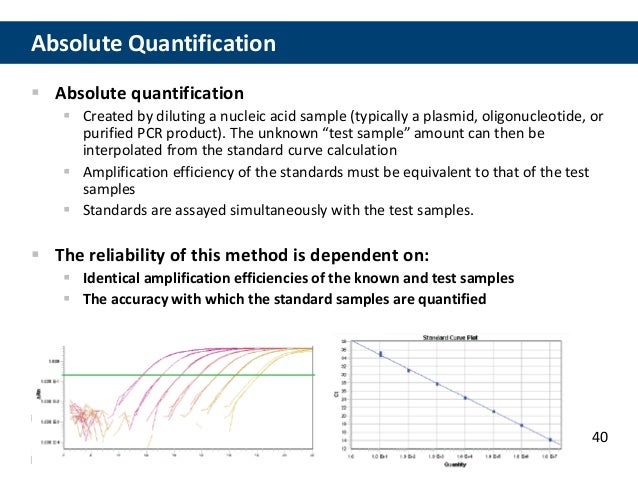
The quantity of target in a given sample is then determined using either a standard curve or relativecomparative quantification.
Absolute quantification qpcr. Digital PCR is a breakthrough technology that provides ultrasensitive and absolute nucleic acid quantification. After setting each of these a C q value is generated and this is used as the basis for quantification. Calculate the differences between experimental values TE HE and the control values TC HC.
Virus quantification involves counting the number of viruses in a specific volume to determine the virus concentration. Dymond in Methods in Enzymology 2013 Abstract. Endpoint semi-quantitative PCR or while the amplification is still progressing real-time QPCR.
At a point where the fluorescence signal is confidently detected over the background fluorescence a quantification cycle or C q value can be determined. Second by avoiding any mRNA enrichment steps one avoids the possibility of skewed results due to different recovery yields for different mRNAs. Unlike analogue quantitative PCR qPCR however absolute quantification with dPCR does not require a standard curve.
87 3 2015 Jan 23 pp. UAQPCRTEquation universal absolute qPCR transformation equation. Accurate baseline and threshold setting is imperative for reliable quantification.
Go beyond the limits of real-time PCR for even higher accuracy sensitivity and absolute quantification. In endpoint semi-quantitative PCR fluorescence data are collected after the amplification reaction has been completed usually after 3040 cycles and this final fluorescence is used to back-calculate the amount of template present prior to PCR. This type of analysis is different from Ct and delta Ct comparisons and instead allows each assayed target to be quantified independently without the need for reference standards.
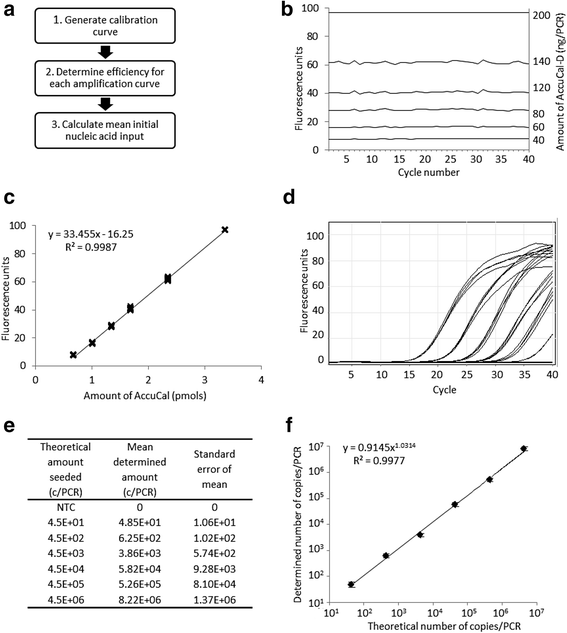
The primary qPCR metric the quantification cycle C q 1 depends on many factors including where a threshold is set the choice of reporter and day-to-day variation in measurement. Absolute copy number from the statistics of the quantification cycle in replicate quantitative polymerase chain reaction experiments Analyt. In some cases it may be possible to analyze end-point data to make a semi-quantitative analysis of the PCR yield but quantitative measurements are more often made using qPCR and analysis of quantification cycle values C q 1 values.
It is utilized in both research and development RD in commercial and academic laboratories as well as production situations where the quantity. QPCR-based gene expression analyses and verification of RNA-seq data require quick access to highly specific and sensitive assays for the targets of interest. For absolute quantification.
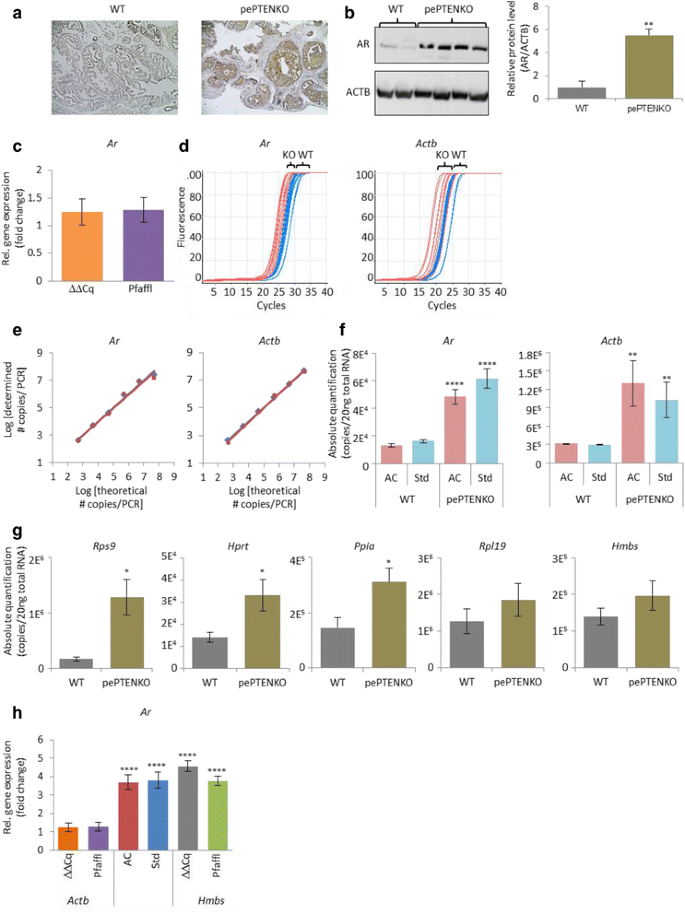
Most of the time a qPCR experiment will give a relative expression which is a variation of the expression of a gene between two samples. Absolute quantification is determined by ratio of number of negative versus total reactions. Which is correct with regard to gene detection and quantification when I am assuming the same efficiency as the standard.
It offers increased precision more reliable measurements and absolute quantification from very small or mixed samples. 11032021 There are two main ways to analyze qPCR data. In qPCR the amplification of DNA is monitored in real time allowing the quantification of target DNA throughout the process.
Anal Chem 87 89258931. Likewise while qPCR may be able to provide results within a matter of hours it is laborious requires a skilled operator and is sensitive to contamination. The guide also contains numerous tips and tools for the experienced qPCR user.
Absolute copy number from the statistics of the quantification cycle in replicate quantitative polymerase chain reaction experiments. Then calculate the difference between the Delta CT values for the experimental and the control conditions Delta CTE Delta CTC to arrive at the double delta Ct. C q values can be used to evaluate relative.
In this Bio-Rad Laboratories Real Time Quantitative PCR tutorial part 1 of 2 you will learn how to analyze your data using both absolute and relative quan. Bias and imprecision in analysis of real-time quantitative polymerase chain reaction data. Each 10-fold dilution should have a 33 cycle difference.
It is particularly useful for low-abundance targets targets in complex backgrounds allelic variants SNPs and for monitoring subtle changes in target. Library Quantification DNA Standards 1 6 a 10-fold dilution series of a. DPCR is a new more refined approach that breaks the PCR process up into many smaller steps.
On the other hand methods for quantifying viral antigens or viral gene expression are generally quicker and reproducible. Double delta Ct analysis and the relative standard curve method Pfaffl method. The Quantitative PCR Technical Guide from Sigma-Aldrich is intended to provide new users with an introduction to qPCR an understanding of available chemistries and the ability to apply qPCR to answer research questions.
Dye-based quantitative PCR qPCR uses real-time fluorescence of a double-stranded DNA dsDNA binding dye most commonly SYBR Green I to measure DNA amplification during each cycle of a PCR. Its also possible to determine an absolute quantification copy number of a gene but this technique requires a standard. Taken together total RNA is more suitable to use in most cases since relative quantification of the targets is more important for most applications than the absolute sensitivity of detection 1.
See also Unit 158 steps 10 to 14 which refer to absolute quantification. These are your Delta Ct values for the experimental Delta CTE and control Delta CTC conditions respectively. By counting positive nano reactions and applying Poisson statistics absolute quantification of the sample by dPCR is achieved.
They often have difficulty for absolute particle counting. The samples should all be contained within the high and low ends of the respective standard. QPCR is a relative method requiring the comparison of two or more samples to a standard curve or to each other standardisation of results is very challenging.
KAPA Library Quantification Kits for Illumina platforms provide all the reagents needed for absolute qPCR-based quantification of Illumina libraries flanked by the P5 and P7 flow cell oligo sequences. Typically the cloning of the cDNA of the gene into a vector. View the amplification plots of the standard reactions to ensure that the assay is performing correctly Fig.
DPCR enables the absolute and reproducible quantification of target nucleic acids at single-molecule resolution. Tellinghuisen J Spiess AN.

Tissue Specific Calibration Of Real Time Pcr Facilitates Absolute Quantification Of Plasmid Dna In Biodistribution Studies Molecular Therapy Nucleic Acids
Technical Tips For Qpcr
A Simple Accurate And Universal Method For Quantification Of Pcr Bmc Biotechnology Full Text

Strategies In Qpcr Absolute Vs Relative Quantification

Strategies In Qpcr Absolute Vs Relative Quantification

Bio Resource January 2013
A Simple Accurate And Universal Method For Quantification Of Pcr Bmc Biotechnology Full Text

Gene Quantification On The Lightcycler 480 System


.png)